


Is South Korea Worth Visiting? Our Honest Review in 2026

Updated: 3 days ago
Is South Korea worth visiting? We fell for its ancient traditions, spectacular scenery and friendly locals. But pricey hotels, getting around and traditional beds gave us a few surprises.

In our humble opinion, if you love Japan, you’ll love South Korea. Both marry cutting-edge technology with deeply traditional culture, backed by spotless streets, safe neighbourhoods and public toilets you can actually use without bracing yourself.
But the personalities are different. Japan, especially Tokyo can feel built around solitary living and restrained cordiality. South Korea, including Seoul, is far more social, with a strong sense of couples and community, and Koreans are wonderfully warm and friendly. They will approach you. Sometimes whether you’ve invited them to or not.
We absolutely loved the history and beauty of South Korea's countryside and were smitten by Seoul’s vibe with its enormous palaces, hanok villages and atmospheric design cafes in Ikseon-dong. And yes, those viral design-led cafes all over Instagram? YES, they really are that gorgeous in-person with delicious treats to match.
Contents
Affiliate disclosure: Some links in this guide are affiliate links, which means we may earn a small commission if you book or buy through them, at no extra cost to you. We only recommend things we’ve personally booked, used or packed ourselves and would recommend regardless of whether we earn a commission.
Getting Around South Korea

Seoul is enormous, so don't underestimate how long it takes to get between neighbourhoods. We found it much easier to pick an area each day rather than zigzagging across the city trying to tick things off a list. And download Naver Maps before you arrive. Google Maps is fine for finding places, but its walking or metro directions are about as useful as a chocolate teapot.
The KTX and other fast trains are excellent for getting around South Korea north to south, but travelling east to west is a different story. Andong was an absolute pilgrimage. Getting there from Gwangju (base for Boseong tea fields) meant returning all the way to Seoul before heading east again, with so few connecting trains that there was essentially no margin for error. Miss one connection and your carefully constructed itinerary starts looking considerably less clever.
Seoul itself is much easier. Public transport is excellent, and taxis are inexpensive enough that we used them liberally when they saved time or unnecessary faffing. For two people, sometimes the taxi was barely more expensive than public transport and considerably more convenient.
The lesson? Korea is easy to travel around once you understand the system, but don't assume that because a destination looks close on a map, getting there will be straightforward.
Lost in Translation?
English is widely spoken in the touristy parts of larger cities, but outside them, communication can become considerably more creative if you don’t speak Korean. Since it took us about a week to learn how to say “thank you” properly in Korean, we recommend a translation app.

For explaining a serious food allergy, however, do not wing it. Use a Korean allergy card. You can create an allergy card in Canva in your native language, screenshot it, then ask ChatGPT to translate it into Korean. Run the Korean version through Google Translate to check the meaning survived the journey. We also sent ours to one of our hotels in advance and asked a native speaker to check the wording and flag any nuances that could help us eat more safely. If you don't want the faff of making your own, you can buy one for any food allergy from Equal Eats.
The Food Situation
If you're vegetarian, vegan or have a shellfish allergy (like Shal does), eating in Korea is challenging. Korean food is rife with hidden shellfish ingredients such as shrimp salt and shrimp paste, and we strongly recommend planning where you’ll eat rather than relying on spontaneous food discoveries.
In Seoul, you'll have a much easier time finding safe options, although they won't necessarily be the local dishes you travelled all this way to try. Sadly, that means abandoning the dream of eating your way through Gwangjang Market, Myeongdong Street Food Market and Tongin Market, where the idea of filling a lunchbox with old-style brass coins is utterly charming.
For shellfish allergies, Korean BBQ is doable if you avoid most of the side dishes, or head to Ziu BBQ in Seoul, which makes non-traditional banchan without shellfish.
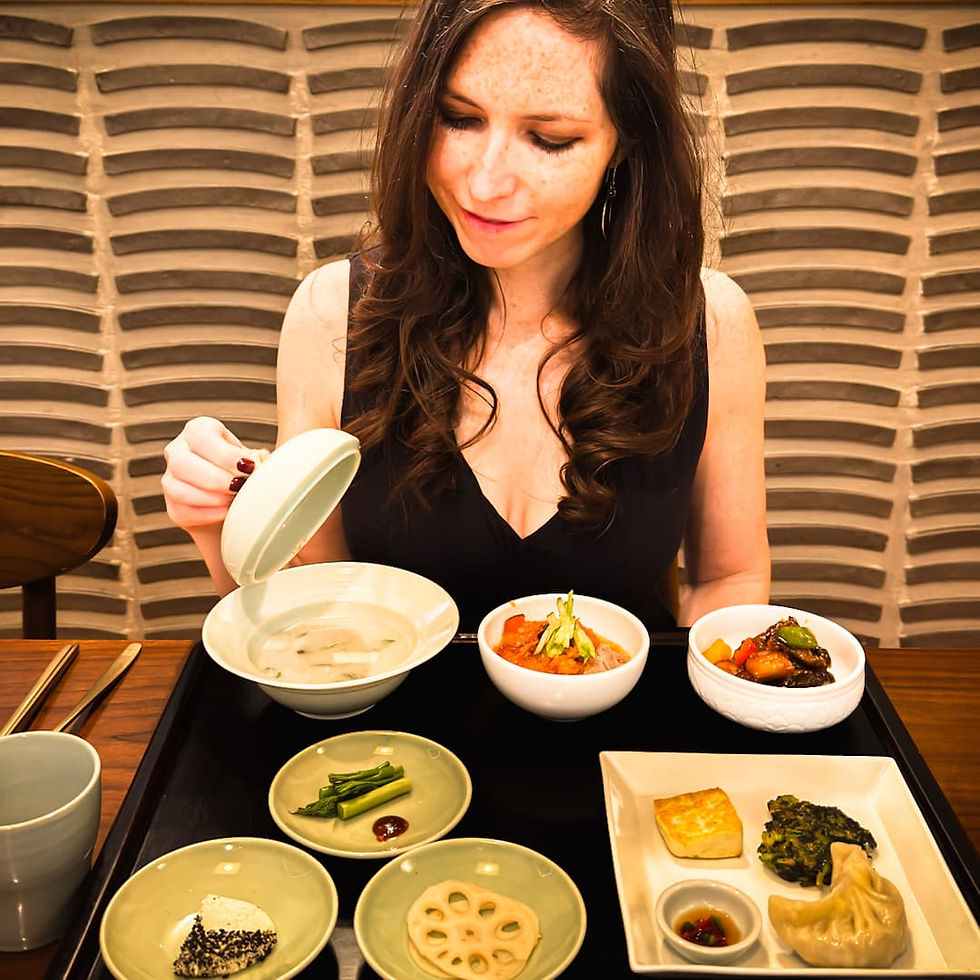
Temple food is another option and is genuinely 100% vegan, unlike Vietnam, where apparently “vegan” can still contain oyster sauce. We tried the 7-course tasting menu at Balwoo Gongyang in Seoul, supposedly the best of the best, but wouldn’t recommend it. Aside from the crispy mushrooms, we found it rather like being prescribed lunch rather than eating it. Maybe it's because they ban the use alliums for flavour (garlic, onions, scallions, chives and leeks). Then, just to put the cherry on the medicinal pudding, a giant cockroach crossed our path on the way out. It was, thankfully, the only cockroach we saw anywhere in Korea.
Outside Seoul, things get considerably harder. Eating safely in Boseong and Gwangju would have been impossible without a local guide, while Andong was simply a write-off, so we came prepared with Summit to Eat freeze-dried field meals.
James did sample the local Andong chicken, but at eye-wateringly high prices compared with the rest of South Korea, and after an hour of picking through it, there was apparently more bone than chicken. I had to help with the excavation.
So yes, you can travel Korea with dietary restrictions. But spontaneity is not your friend, particularly outside the major cities. We planned our meals, carried emergency food and accepted that sometimes the safest option would not be the most exciting one.
A Word About Beds
If you identify with Goldilocks when it comes to mattresses, stay in a luxury hotel when you're in Seoul. You’ll get the plush-but-supportive bed your back deserves.

Hanok stays are gorgeous and wonderfully atmospheric, but you’ll most likely be sleeping on a bedroll on the floor. Koreans repeatedly reassured us that it was good enough for their kings. Our backs remain unconvinced. It feels less royal sleeping quarters and more cement...well tile.
And if you’re travelling around South Korea, bank the comfortable sleep in Seoul. Even the “luxe” accommodation elsewhere tends to come with one of two options: extremely firm mattress or floor.
Is South Korea Expensive?
This one surprised us. We expected Korea to be considerably cheaper, particularly after seeing how inexpensive so many everyday things were.
Food was generally very affordable, drinks were inexpensive, taxis were remarkably reasonable and attractions were an absolute bargain. Accommodation, however, was a completely different story.
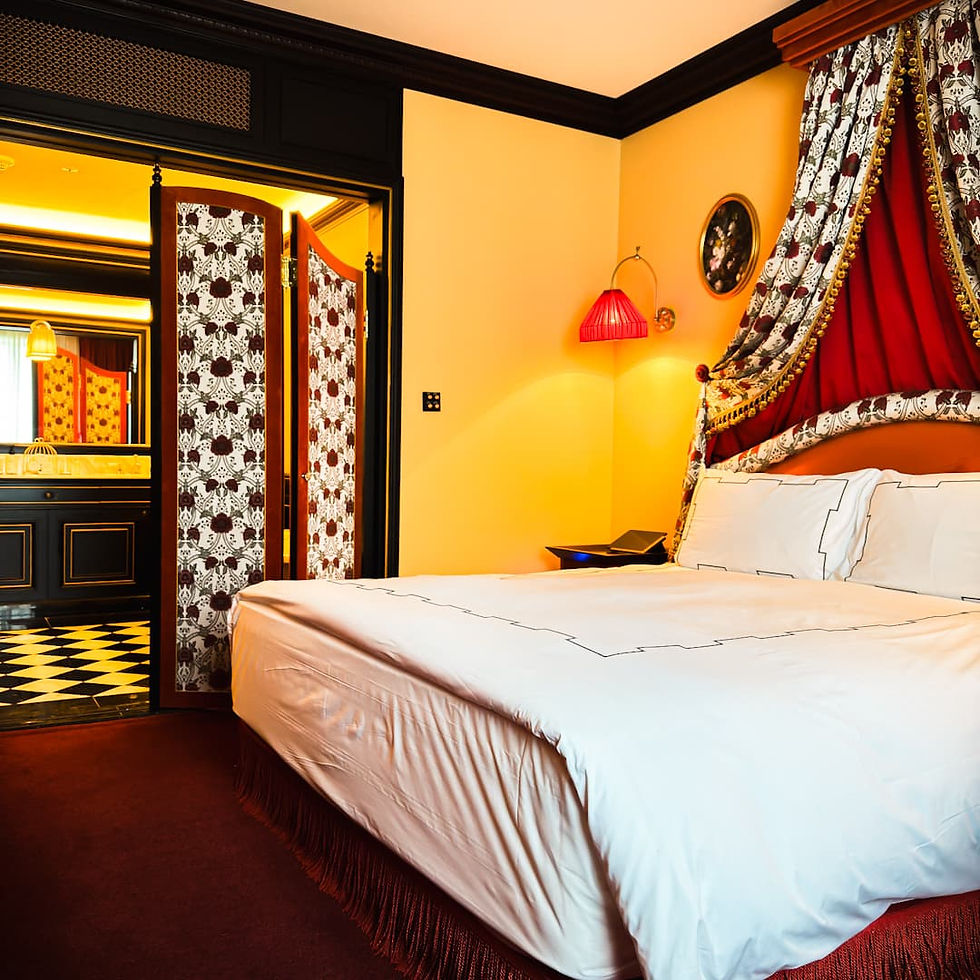
We were genuinely surprised by how much hotels cost across the country, particularly when compared with what we were paying for everything else. Seoul wasn't the only culprit either. Even outside the capital, accommodation could be surprisingly expensive, even for places rated as 3-star.
It creates a slightly odd equation where you can have a delicious meal, jump in a taxi across town and visit a major attraction without spending much at all, then arrive at your hotel and wonder whether someone accidentally added a zero.
If you're travelling South Korea on a budget, this is worth factoring in. And if you like luxury like we do, don't assume that your accommodation budget will stretch as far as it might elsewhere in Asia.
Our Verdict: Worth It?
So, is South Korea worth visiting? Absolutely.
It isn't necessarily the easiest country we've travelled around. The east-west transport network (or lack there-of) can turn a seemingly simple journey into a pilgrimage, food requires considerably more planning if you have dietary restrictions, and accommodation costs more than we expected.

But that's balanced by wonderfully friendly people, fascinating living traditions, brilliant public transport where the network works in your favour, inexpensive taxis and stunning architecture, phenomenal cafes, spectacular scenery and cities that effortlessly blend the ancient with the futuristic.
We'd go back in a heartbeat. We'd just pack more emergency field meals, book our hotels even earlier than usual to get better rates and take a very serious look at the train map before promising ourselves that somewhere is “just over there.”
South Korea rewards a little preparation. Do that, and you'll spend far more time enjoying the country once you arrive.