


South Korea Itinerary 2026: Why We Skipped Busan & Jeju for 3 Underrated Gems

Updated: 2 days ago
Forget the usual Seoul, Busan and Jeju circuit. Our 10-12-day South Korea itinerary takes you to ancient kingdoms, lush tea fields and traditional villages that deserve a spot on your bucket list.

Most first-time South Korea itineraries head from Seoul to Busan and/or Jeju. But there’s a whole lot more to the country than its greatest hits. Venture a little further and you’ll find ancient capitals, living traditions, rolling tea fields and UNESCO-listed villages, often with far fewer crowds.
This 10-12-day route swaps the usual stops for three very different experiences: 5 nights in Seoul, 2 nights in either Boseong and/or Andong Hahoe Folk Village, and 3 nights in Gyeongju.
If you’re looking to travel a little deeper, rather than simply tick off the places everyone else visits, this is our route for seeing a different side of South Korea.
In a Rush? Here's Our Favourite Places to Stay in South Korea
Contents
01 The Route
Affiliate disclosure: Some links in this guide are affiliate links, which means we may earn a small commission if you book or buy through them, at no extra cost to you. We only recommend things we’ve personally booked, used or packed ourselves and would recommend regardless of whether we earn a commission.
The Route

Stop 1 | Seoul • 5 Nights
Start your Korea adventure by exploring Seoul, from royal palaces and traditional hanok neighbourhoods to buzzing markets, K-pop performances and a hidden golden temple.

Stay in Myeongdong: it’s centrally located, well connected and makes getting around Seoul considerably less of a mission. We’d also recommend splurging on a luxury hotel here. We stayed at both The Westin Josun Seoul and L’Escape Hotel, and loved them equally. Well, almost equally. L’Escape won by a whisker, largely because its bathroom was so spectacular.
We highly recommend banking a few nights of proper sleep before the rest of the trip, when the beds become progressively firmer and, on occasion, you may find yourself sleeping on the floor. Unless you’re into that sort of thing, in which case, carry on.
Our route tip: Save Day 5 of this Seoul itinerary for the end of your trip. Return to the capital in the morning, spend the day exploring Gangnam and the COEX Mall, then stay one final night before your flight home. If your journey back takes longer than planned, this is the easiest Seoul day to trim, as K-Star Road is more of a bonus than a must-see.
Day 1 · Arrival + Myeongdong

Your first day is mostly about getting here in one piece. Once you’ve checked in, head out for dinner, then wander through Myeongdong’s buzzing night market for your first taste of Seoul. Save the serious sightseeing for tomorrow. Your jet-lagged self will thank you.
Day 1 at a glance
Evening: Myeongdong Night Market
Day 2 · Gyeongbokgung + Bukchon + Insadong + Ikseon-dong

Now the fun begins. Start at Seoul’s grandest sight, Gyeongbokgung Palace, for a dose of royal grandeur. Get to the main gate by 9:45AM to bag a front-row spot for the 10AM changing of the guard ceremony.

You can either hire a hanbok (Joseon dynasty costume) and swan around the palace for free, or pick up a combo ticket covering all four royal palaces plus Jongmyo Shrine. Just buy it from a human, as the machines won't sell you one.
Then work your way through Seochon and Bukchon’s hanok villages before strolling through the touristy old town, Insadong, stopping at Jogyesa Temple before moving on to the much more charming Ikseon-dong.

Along the way, make a pit stop at Osulloc Tea House in Bukchon for their signature iced matcha latte, which is quite possibly the best we've had anywhere, Japan included. If one matcha feels insufficient, go for the flight. Just don't get too caffeinated, because you'll want to save some room for cafe-hopping once you reach Ikseon-dong.

Expect tiny lanes lined with traditional wooden hanok houses, many dating back to the 1920s, now converted into independent shops, restaurants and design-led cafes. We’ve rounded up our favourite spots in our Seoul Travel Guide, so you can pick your poison when you get there.

If, like us, you have a tendency to look at a perfectly reasonable itinerary and ask “but what else can we squeeze in?”, tack on Suwon. Head there in the early evening to walk the fortress walls as the sun starts to drop, stay for dinner (lots of restaurant options along your route), then head back to Seoul. It makes for a long day, but UNESCO-listed Hwaseong Fortress at golden hour is a pretty good reward for refusing to sit down.
Day 2 at a glance
Morning: Gyeongbokgung Palace + changing of the guard
Late morning: Seochon Hanok Village
Afternoon: Bukchon Hanok Village + Insadong
Late afternoon: Ikseon-dong
Evening: Hwaseong Fortress
Getting to Suwon
Take a direct KTX from Yongsan Station to Suwon, which takes around 30 minutes. Trains run regularly, so you don't necessarily need to book ahead, although we did to make sure we arrived in time for golden hour, then simply bought our return ticket in Suwon after dinner. If you miss out on a KTX, the subway takes roughly twice as long but runs frequently, so you're not exactly stranded.
Day 3 · Deoksugung + Changdeokgung + Jongmyo

Give Seoul’s royal past another day, because one palace-filled day is never enough. Start at Deoksugung Palace, then make your way to UNESCO-listed Changdeokgung Palace and its beautiful Secret Garden before continuing to Changgyeonggung Palace and UNESCO-listed Jongmyo Shrine. Finish with an evening stroll along Cheonggyecheon Stream, when the city lights start reflecting on the water.
Just a heads up that the Changdeokgung Palace Secret Garden has separate timed-entry tickets that sell out instantly. Online tickets are released at 2pm KST, 6 days before your visit. We were setting a 2am alarm in London to snag ours. Worth the sleep deprivation.
Day 3 at a glance
Morning: Deoksugung Palace
Late morning: Changdeokgung Palace + Secret Garden
Afternoon: Changgyeonggung Palace + Jongmyo Shrine
Evening: Cheonggyecheon Stream
Day 4 · Suguksa + Hongdae

Take a 30-minute taxi to north-west Seoul to visit Suguksa Temple, Korea's only gold-clad temple. It's blissfully under the radar, so you'll have it to yourself.

Then head west to Hongdae for the afternoon, where independent shops, cafes and youthful energy make for a change of pace. Don't miss Hongdae R2 Busking Street, the pedestrianised stretch near Hongik University Station, for the evening performances. 6-9PM on Friday and Saturday nights are your best bet for catching K-pop singers and dance crews, although performances aren't guaranteed.
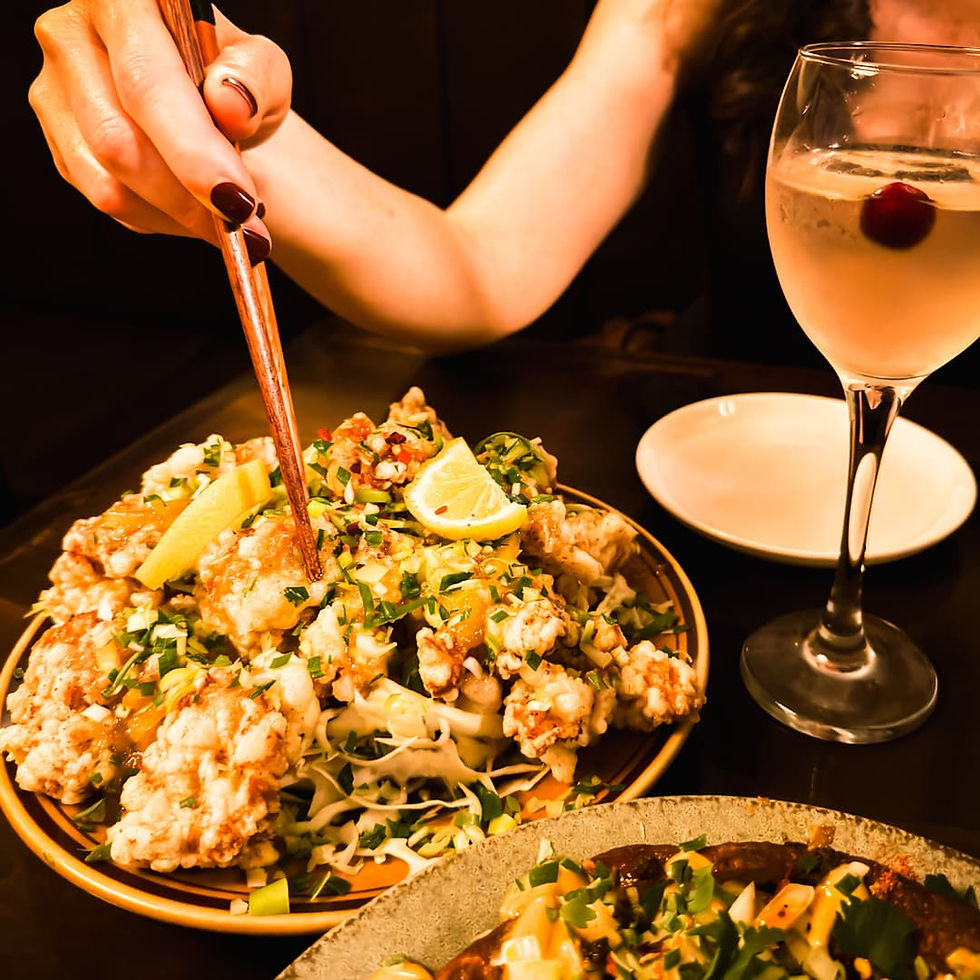
Once you’ve had enough of Hongdae's street performers, head to dinner at Hangong-Gan, a tiny 16-seat restaurant serving our favourite meal in Korea. We don't even like fried chicken, yet we’re still talking about theirs. The chef speaks fluent English, can accommodate food allergies and makes his own sake. Direct message on Instagram one week ahead to reserve.
Day 4 at a glance
Morning: Suguksa Temple
Afternoon: Hongdae
Evening: Hongdae street performers
Day 5 · Gangnam + COEX + Bongeunsa + Banpo

Cross the Han for your final full day and start in Gangnam, wandering K-Star Road, a 1km stretch lined with bear-shaped GangnamDols representing K-pop groups. Unless you’re a serious K-pop fan, fancy some luxury shopping or want a photo with the PSY GangnamDol, we’d call it fairly missable.

Then head to Bongeunsa Temple, where a 23-metre Maitreya Buddha towers over the temple grounds, before crossing the road to Starfield COEX Mall and its spectacular library and giant K-pop screens. Have dinner here, where there’s no shortage of restaurants, then head to Banpo Hangang Park for the Moonlight Rainbow Fountain. Shows run from April to October, with performances at 7:30PM, 8PM, 8:30PM and 9PM, plus 9:30PM in July and August.
Day 5 at a glance
Morning: K-Star Road + Gangnam
Late morning: Bongeunsa Temple
Afternoon: Starfield COEX Mall + Starfield Library + K-pop Square
Evening: Banpo Hangang Park + Moonlight Rainbow Fountain
Stop 2 | Boseong or Andong • 2 Nights
After 5 days in Seoul, it’s time to swap skyscrapers for tea fields or a 600-year-old village. This is where the pace changes a little, with two very different options depending on what you fancy seeing.

Both need 2 nights, not because we’re suggesting you take things slowly, but because each deserves a full day once you’ve made the journey. Choose between rolling Boseong green tea fields and tea culture, or Andong Hahoe Folk Village's traditional hanok and Confucian heritage.

Day 6-7 · Option A · Boseong Tea Fields
Head south from Seoul to Gwangju-Songjeong Station, then base yourself in Gwangju for 2 nights. We stayed at the Holiday Inn Gwangju. It’s not going to win any prizes for atmospheric charm, but it was the best of the nearby options, and, more importantly, works perfectly for the early start and hotel pick-up for a private Boseong green tea fields tour.

The big reason to come is the tea. Daehan Dawon has 5 million tea trees and the best matcha ice cream you'll ever lick, while Choroknip Tea Farm has one of the prettiest viewpoints in Korea, with terraces rolling all the way down towards the sea.

Add a private tea ceremony at the Korea Tea Museum and a visit with a local tea farmer, and you’ve got a full day without needing to invent extra things to do.
The Boseong tour runs 9:30AM–6:30PM, so staying nearby the night before and after makes life considerably easier. We booked a private tour with Veronica at Tasty Trails Korea, including hotel pick-up and drop-off, and it was one of the highlights of our trip.
Getting there: Take the KTX from Yongsan Station to Gwangju-Songjeong Station, which takes around 2 hours. Even though Gwangju-Songjeong Station is much closer to the Holiday Inn than Gwangju Station, you're still looking at a 15-25-minute taxi ride.
Day 6-7 · Option B · Andong Hahoe Folk Village

If tea isn't quite your thing, head east to Andong, where the pace drops considerably. Hahoe Folk Village is a 600-year-old UNESCO-listed clan village filled with traditional hanok homes and atmospheric lanes, and it deserves more than a whistle-stop visit.

Spend a full day exploring Andong Hahoe Folk Village catching the centuries-old mask dance, making the short climb to the Buyongdae Cliff viewpoint and, if time allows, visiting Byeongsanseowon, a beautifully preserved 16th-century Confucian academy.

Stay at Rakkojae Hahoe Hanok Hotel, inside the village itself, so you can experience Andong Hahoe Folk Village after the day-trippers have gone home. The extra morning also gives you some welcome weather flexibility or time to squeeze in anything you missed.
Getting there: Take the KTX from Cheongnyangni Station to Andong Staion, around 2 hours, then a 20 minute taxi to the hotel.
Stop 3 | Gyeongju • 3 Nights
UNESCO-listed Gyeongju was the capital of the Silla Kingdom for almost 1000 years, and it has left a rather unusual mark on the skyline. Around 150 ancient burial mounds ripple through the city like oversized grassy hills, with low-rise buildings deliberately keeping their distance so the tombs remain the tallest things around. It’s a landscape you’re unlikely to mistake for anywhere else.

Stay in a hanok and give yourself 3 days to see the historic centre properly, venture further afield to the Gyeongju National Museum and Expo Park, then finish with the magnificent temples of Bulguksa and Seokguram.

We stayed in the Yeojeon Premium Suite at Soi Hanok Stay, which put us nicely in the middle of the historic area and made exploring on foot particularly easy. If Soi Hanok Stay isn't available, try HanokInn (it was our plan b).
Day 8 · Historic Gyeongju

Start among the ancient royal tombs at Daereungwon, then walk through the historic centre to Cheomseongdae Observatory, Gyerim Forest and the former royal palace site at Wolseong. Continue to Gyochon Traditional Village and Woljeonggyo Bridge, then spend the late afternoon browsing the cafes and shops of Hwangnidan-gil.

After dark, head to Donggung Palace & Wolji Pond, where the illuminated pavilions are perfectly reflected in the water. It’s one of those places that somehow manages to look even better at night.
Day 8 at a glance
Morning: Daereungwon + Cheomseongdae
Afternoon: Gyerim + Wolseong + Gyochon + Woljeonggyo
Late afternoon: Hwangnidan-gil
Evening: Donggung & Wolji
Day 9 · Silla Treasures + Modern Gyeongju
Unlike ancient Egyptian tombs, these had no entrances. No corridors. No way in. The result? Gold crowns, jewellery and royal treasures remained untouched for 1,500 years and they're all on display at the beautifully curated Gyeongju National Museum.

Once you've had your fill of history, head to Gyeongju EXPO Grand Park for the Gyeongju Tower and media-art installations.

Finish at the Kyungju Noseori Tombs for golden hour and sunset, where, unlike at Daereungwon, you can wander between the tombs. The enormous grassy mounds make a rather spectacular backdrop as the light fades.
Day 9 at a glance
Morning: Gyeongju National Museum
Afternoon: Gyeongju EXPO Grand Park
Evening: Kyungju Noseori Tombs
Day 10 · Bulguksa + Seokguram

Head into the mountains to Bulguksa Temple, one of Korea’s most important Buddhist sites and part of the UNESCO World Heritage listing with Seokguram Grotto. It’s around a 20-minute taxi from Gyeongju's historic centre.
The uphill hike between the two sites takes 1.5–2 hours, so we abandoned all pretences of athletic prowess and took Bus #12, which gets you there in about 20 minutes. The catch? It runs about once an hour, so a taxi is probably the better use of your time if you don't fancy spending half your day waiting for the bus. At Seokguram, you’ll find an extraordinary granite Buddha overlooking the East Sea.

At Woljeonggyo Bridge, come back after dark when the illuminated bridge creates a perfect mirror image in the water. The stepping stones in the water are your ticket a postcard view.
Day 10 at a glance
Morning: Bulguksa Temple
Afternoon: Seokguram Grotto
Evening: Woljeonggyo Bridge
Have another day?
Take a 30-minute taxi to visit Yangdong Folk Village, the other UNESCO-listed clan village or hike Mount Namsan where Silla-era Buddhist carvings, statues and pagodas are scattered through the mountain landscape along the western Samneung Trail. For us, Mount Namsan is the one that got away.
Getting Between Stops
South Korea is wonderfully easy to navigate north to south, thanks to an excellent network of KTX and other fast trains. East to west is another matter entirely.

Seoul → Gwangju
Take the KTX from Yongsan Station to Gwangju-Songjeong Station, with the fastest trains taking around 2 hours. It’s an easy journey and the obvious choice for reaching Gwangju, the base for exploring the Boseong tea fields.
Seoul → Andong
Take the KTX-Eum from Cheongnyangni Station to Andong, which takes around 2 hours. From Andong Station, allow another 20–30 minutes by taxi to reach Hahoe Folk Village.
Gwangju → Andong
This is where things get considerably less clever. There’s no straightforward fast train between the two, so if you’re determined to include both, the simplest rail route is essentially Gwangju-Songjeong → Seoul → Andong, meaning you head all the way back north before heading east again. Allow most of a day for the journey and leave plenty of breathing room between connections. We did it, but one missed train would have made our carefully constructed itinerary look considerably less clever.
If you have your heart set on both the Boseong tea fields and a UNESCO-listed clan village, but not the extra logistics, there’s an easier option: add a day to Gyeongju and take a 30-minute taxi to visit Yangdong Folk Village instead. This historic clan village sprawls across the hillsides, so it takes a little more effort to explore than compact Hahoe Folk Village (and there's no mask dance), but it gives you the same glimpse into Korea’s traditional village life without the Gwangju-to-Andong pilgrimage.
Our advice: if you’re planning a multi-stop Korea trip, book your KTX tickets as soon as they’re released. Popular routes can fill quickly, and when your itinerary depends on a connection, there isn’t always another convenient train waiting behind it.
KTX tickets currently go on sale 2 months before departure. You can book through the KORAIL website for foreigners.
South Korea Travel Guide
The sights are one thing. Here’s everything that made the trip run more smoothly, from where we stayed and ate to the apps we actually used.
Where to Stay
Myeongdong may not be our favourite neighbourhood, but its central location makes exploring Seoul a breeze, without endless subway rides or taxis. After plenty of research, we stayed in two luxury hotels here at either end of our South Korea trip and loved both for their location, comfort, service and atmosphere.
You'll want to stay in Gyeongju's historic centre, within walking distance of the royal tombs, ancient sights and Hwangnidan-gil, a charming street lined with cafes, boutiques and restaurants. That means swapping hotels for a traditional hanok, a Korean house built around a courtyard, typically with tiled roofs and wooden beams.
We stayed in the Yeojeon Premium Suite at Soi Hanok Stay and loved that our room was spacious with a Western-style bed. Fancy a traditional Korean breakfast? Soi Hanok Stay delivers one to your balcony, complimentary, most mornings of the week, courtesy of a nearby restaurant (when it’s open).
Had Soi Hanok Stay been fully booked, HanokInn would have been our next choice, although you'd need to embrace the traditional Korean experience of sleeping on a floor mattress.
If your reason for visiting is Andong Hahoe Village, Rakkojae Hahoe Hanok Hotel is really the only game in town. We loved being able to walk to the UNESCO-listed village without relying on tours or shuttle buses. The beautiful hanok architecture, private mugwort steam rooms (complete with sauna outfits and slippers!) and 16th-century-inspired dining make the hotel an experience in itself.
The catch? Korean kings slept on the floor, and so will you. As lovers of plush Western beds, we found it rather uncomfortable. But the atmosphere and location were so exceptional, we'd happily return.
Let’s be clear: you’re staying in Gwangju for Boseong’s glorious tea fields, not the hotels. Accommodation options are uninspiring, so don’t agonise over them. Holiday Inn Gwangju isn’t winning any awards for atmosphere, but it was the best of the nearby options. It’s comfortable, practical and perfectly suited to an early start and hotel pick-up for a private Boseong tour. Job done.
Where to Eat
Our dining options were extremely narrowed by Shal’s shellfish allergy, but James had no such restrictions and declared these places epic too.
Seoul • Hangong-Gan • We don't even like fried chicken and still talk about theirs.
Seoul • Ziu BBQ • Better banchan (side dishes), but less buzzy than most K-BBQ spots.
Seoul • Osulloc Tea House Bukchon • Best iced matcha latte, Japan included.
Seoul • Nakwon Station Cafe • Vintage train station theme with a delicious peanut cream latte.
Gyeongju • Domi Pizza • Outstanding pizza and beer.
Gyeongju • Ryomi • Pesto noodles are divine, but wear a bib!
Apps to Download
Download these three before you go. Because discovering you needed them after arriving is considerably less useful.
Before You Go
Seoul may be high-tech, shiny and impressively cashless, but you’ll still need some Korean won (KRW), if you want to sample street food stalls or venture into the countryside.
Before you go, check that your debit or credit card doesn’t charge foreign transaction, and make sure you know your PIN. Then, once you arrive, withdraw some KRW from an ATM rather than changing a load of cash before your trip.
One other thing to remember: when the ATM asks whether you want to be charged in KRW or your home currency, choose KRW. This declines the ATM’s own currency conversion and lets your card issuer handle the exchange instead, which will usually give you a better rate.
The same applies when paying by credit card: always choose to pay in the local currency (i.e. KRW) rather than your home currency, and use a card with no foreign transaction fees.
Is South Korea Worth Visiting? Our Honest Review
Is South Korea worth the long flight? Absolutely.
From Seoul’s sensory overload to quiet clan villages, ancient kingdoms and tea-covered hills, it’s a country that keeps changing character. But there are a few things we wish we’d known before we went.