


Where to See the Best Porto Tiles

Updated: Apr 9
If Porto had a signature colour, it’d be blue, glazed, patterned, and covering entire buildings. Say olá to Porto’s azulejos (ah-zoo-LAY-zhos) on this 9-stop DIY walking tour, where the city’s tiles turn storytelling into an art form.
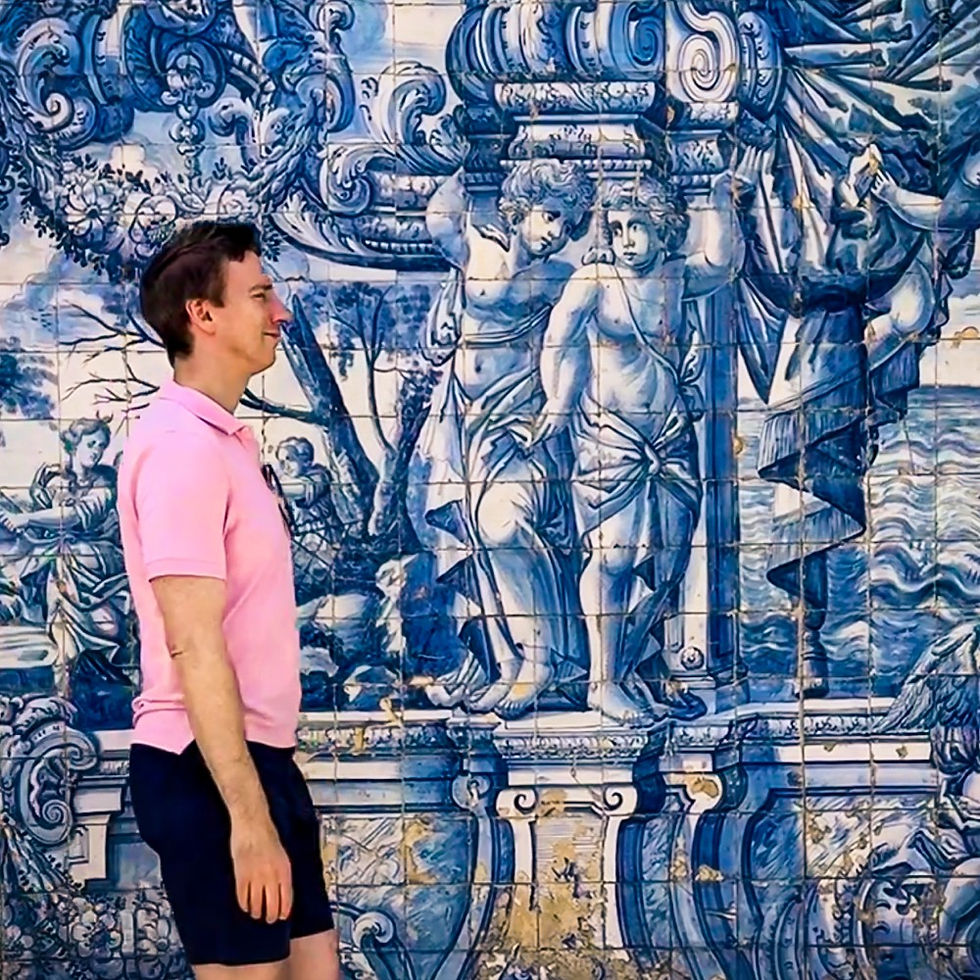
THANK YOU FOR YOUR SUPPORT!
This post has affiliate links, which means we may earn a teeny commission if you book through them (at no extra cost to you). We only recommend what we’ve road-tested, adored, or nearly booked ourselves. Your support helps keeps our adventures going – thank you.
9-STOP TILE TREASURE HUNT

Start at the upper end of Rua de Santa Catarina to see the Chapel of Souls (Capela das Almas). This church is covered entirely on two sides with magnificent blue and white azulejos, depicting scenes from the lives of saints. It's one of the most photographed tile facades in the city and for good reason.
Azulejo (pronounced ah-zoo-LAY-zhoo) is the Portuguese and Spanish term for a glazed, ceramic tile. Azulejos are generally thin, square tiles with a glossy glazed finish and are splashed across facades and interiors, where they double as moisture-resistant cladding and as artwork.
Funnily enough, the word azulejo doesn’t come from the Spanish/Portuguese word for blue (azul), but from the Arabic al zellij, meaning polished stone.
Decorative tile work first arrived in the Iberian Peninsula thanks to the Moors, and by the late Middle Ages Seville, Spain had become the beating heart of tile production.
Azulejos were introduced to Portugal in the late 15th century when King Manuel I, fascinated by the tiles he saw in Seville, brought them back to decorate the Paço Nacional de Sintra.

Walk south from the Chapel of Souls, towards Batalha Square to see Church of Saint Ildefonso (Igreja de Santo Ildefonso). This church, situated on a small hill, features a beautiful Baroque facade covered in azulejos designed by Jorge Colaço who also did São Bento Station (also in this list).
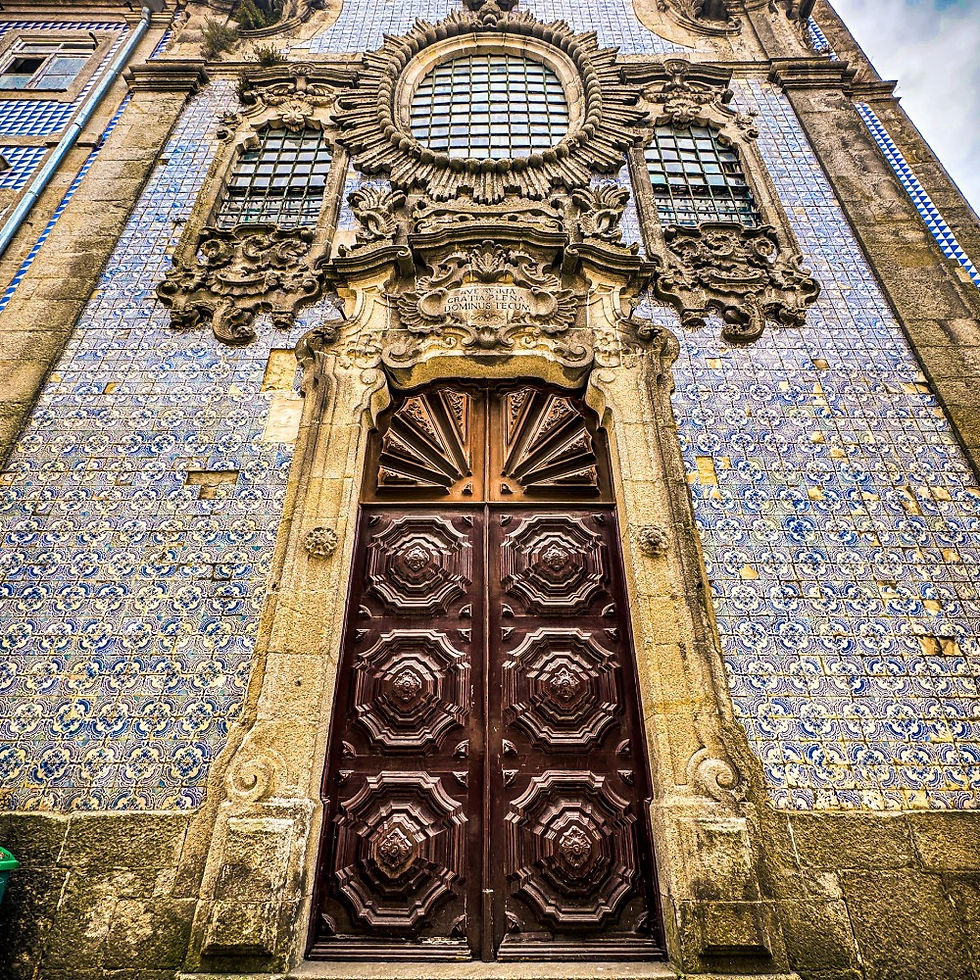
Rua de Cimo de Vila is just a short detour southwest from the Batalha/Saint Ildefonso area. Church of Our Lady of Guia (aka Church of the Third Order of Our Lady of Carmo) is a hidden gem worthwhile to check out before proceeding downhill toward the São Bento Train Station.

After the detour, walk downhill from Batalha Square to São Bento Train Station (Estação Ferroviária de São Bento) to step inside the main hall to see arguably the most famous tile work in Portugal—nearly 20,000 azulejos depicting key moments in Portuguese history, royal life, and scenes of rural life.

After a short but punchy uphill walk from São Bento, you’ll reach Porto Cathedral (Sé do Porto). The cathedral itself is all stone and stature, but the real highlight is the cloister, where blue and white azulejos wrap around the arches in the most beautiful way.
You’ll need a ticket to step inside, but it’s worth it. While you’re up there, take a peek at the Episcopal Palace next door, which shows off a few lovely tiles of its own.
Tile-Clad Buildings Near Clerigos Tower. Rua da Fabrica Tile mural on P. de Guilherme Gomes Fernandes Rua de Alexandre Braga
Walk back down toward the centre near Clérigos, wandering down side streets: Rua da Fabrica, P. de Guilherme Gomes Fernandes and Rua de Alexandre Braga. You’ll find plenty of tile-clad facades and little murals tucked along these smaller streets, giving you a peek at the everyday commercial and residential side of Porto’s tile artistry.
If a self-guided wander isn’t your vibe, you can join a guided tour instead (£39 pp; converted: €44.80 / US$51.86) — or go one better and paint your own azulejo at a local workshop (£31 pp; converted: €35.62 / US$41.24). We wish we’d carved out time for the workshop, but Porto kept us far too busy!
5 AZULEJO FACTS
1 | They’re not actually named after the colour blue.
Azulejo comes from the Arabic al zellij, meaning “polished stone.” The blue-and-white obsession came later, inspired by Chinese porcelain.
2 | Porto is one of the best cities in Portugal for azulejos.
While Lisbon shouts about them, Porto wears them. Many facades here still use original 18th and 19th-century tiles that survived fires, floods and creative city planning.
3 | They weren’t just for decoration.
Historically, azulejos helped regulate indoor temperatures (cool tiles, hot Iberian sun), and they doubled as a literal graphic novel for the public, especially useful when most people couldn’t read.
4 | The blue-and-white craze was actually a flex.
When Portuguese traders saw fine Chinese porcelain, they decided to recreate the look on tiles. The result? Whole buildings turned into sparkling ceramic canvases.
5 | Porto still produces traditional tiles today.
Workshops like the ones in Vila Nova de Gaia keep the craft alive, using the same hand-painting methods from centuries ago. You can even paint your own if you fancy a souvenir with bragging rights.
NOT QUITE DONE EXPLORING?
24 Best Things to Do in Porto: The Spots We’d Plan a Trip Around
Best Restaurants in Porto: 5 Meals We’re Still Thinking About
Pastel de nata Porto: Our Top 4 Spots for the Perfect Custard Tart
DIY Douro Valley Day Trip from Porto: The Easiest Way (+ Itinerary)
Guimarães Day Trip from Porto: Is It Worth It? (+ Itinerary)
Pin this for later!
FOLLOW US ON PINTEREST