


Boseong Green Tea Fields: How We Visited in 2026

5 million tea trees, impossibly green hills and the best matcha ice cream we've ever tasted. Here's how we explored the Boseong green tea fields, why we'd recommend a private tour and everything you need to plan your visit.

Millions of tea trees, rolling hills and terraces stretching towards the sea. We'd seen photographs of the Boseong green tea fields, but nothing quite prepared us for seeing them in person.
We came to South Korea determined to explore beyond the usual Seoul, Busan and Jeju circuit. And Boseong, tucked away in the country's southern countryside, was exactly the sort of place we were hoping to discover.
But getting here takes a little planning. The tea plantations are scattered across rural hillsides, public transport isn't particularly convenient and some of the most memorable experiences aren't places you'd necessarily find on your own.
After a frankly ridiculous amount of research, we managed to find exactly one English-speaking local guide who specialised in the tea fields. So we booked a private tour, crossed our fingers and hoped for the best.
The tour left us wondering how on earth a day spent looking at tea bushes had become one of our favourite experiences in South Korea.
In a Rush? Here's Here's How We Visited the Boseong Green Tea Fields
We booked a full-day private tour with Veronica at Tasty Trails Korea, including hotel pick-up and drop-off from Gwangju. From the famous Daehan Dawon plantation to a private tea ceremony and a visit with a local farmer, it was one of our favourite experiences in South Korea.
Private Boseong Green Tea Fields Tour
Check tour details & availability →
★★★★
Contents
01 Atmosphere
Affiliate disclosure: Some links in this guide are affiliate links, which means we may earn a small commission if you book or buy through them, at no extra cost to you. We only recommend things we’ve personally booked, used or packed ourselves and would recommend regardless of whether we earn a commission.
Atmosphere

Tucked into South Korea's rolling countryside, the Boseong green tea fields are a glorious patchwork of emerald terraces, with millions of tea trees climbing the hillsides in perfectly sculpted rows.
We visited in May, when the plantations were almost absurdly green, and the scenery looked suspiciously like someone had turned up the saturation.
But Boseong is worth visiting for far more than its photogenic hills.
Tea has been woven into Korean culture for centuries, from Buddhist rituals to everyday hospitality. And here, you can do more than admire the plantations. You can meet the farmers, learn the art of Korean tea and experience traditions that are still very much alive.
We came for the scenery. We left convinced that the best part of Boseong wasn't something you could capture in a photograph.
Why You Should Take a Private Tour of the Boseong Green Tea Fields
Could you visit the Boseong green tea fields independently? Absolutely.
Would we recommend it? Not particularly.
You could hire a car, but many of the rural roads we travelled weren't clearly marked, and the best experiences weren't places you'd stumble upon. They were places our guide knew, or tea farmers she knew personally.

We booked a private tour with Veronica at Tasty Trails Korea, who collected us from our hotel in Gwangju at 9:30AM. She was constantly translating, introducing us to locals and revealing a side of Boseong we'd never have discovered alone.
And she went well beyond what we'd booked. She extended our tour by an hour because we were so interested, then accompanied us into a restaurant close to our hotel for dinner, staying until our food allergies were understood and we knew exactly what was safe to eat.
That's the difference between hiring a driver and having an exceptional local guide.
A few highlights of the tour:

Explore Daehan Dawon plantation
Daehan Dawon
Mar - Oct 9AM - 6PM
Nov - Feb 9AM - 5PM
KRW 4,000
If you've seen photographs of the Boseong green tea fields, chances are they were taken at Daehan Dawon.
Home to 5 million tea trees, its impossibly neat terraces sweep across the hillsides, framed by towering cedars and winding paths leading to spectacular viewpoints. It's every bit as beautiful as the photographs suggest.
But the real surprise?
The matcha ice cream.
We've eaten our way through a frankly impressive amount of matcha, including in Japan, but this was some of the best we've ever tasted.
See the view from Choroknip Farm
Choroknip Tea Farm
24/7
Free entry
If we thought Daehan Dawon was beautiful, Choroknip stopped us in our tracks.
From its hilltop viewpoint, emerald tea terraces tumble towards the coast, with forested mountains giving way to glimpses of the sea. One of the most spectacular landscapes we saw in South Korea, and barely another visitor in sight.
Without Veronica, we'd have admired Daehan Dawon, devoured our matcha ice cream and gone home perfectly happy.
And missed the best view of the day.

Experience a tea ceremony
Tea Museum of Korea
Tue - Sun 10AM - 5PM
KRW 1,000
At the Tea Museum of Korea, we enjoyed two private tea ceremonies, discovering the surprisingly intricate rituals behind preparing black tea and matcha. Who knew making a cup of tea could be quite so ceremonial?
The museum also traces Korea's centuries-old tea traditions, from cultivation to the art of brewing.
Visiting independently? Check tea ceremony availability in advance. This isn't necessarily an experience you can simply turn up for.

Meet a local tea farmer
Exclusively arranged via Veronica who also translated
The tea fields were spectacular, but meeting a local tea farmer stole the show. Part tea master, part woodland sorceress.
She whisked us an aged black tea that had us sweating like malfunctioning radiators within minutes. Slightly alarming, until Veronica translated her explanation: it was a warming tea, supposedly excellent for immunity.
We didn't catch a cold for ages afterwards. Coincidence? Possibly. But this woman looked on track for her 137th birthday, so who were we to argue?
As if the highlights above weren't enough, Veronica also took us to Gangin Dawon, a beautiful tea plantation at the foot of Mt. Wolchulsan. Here, we saw how tea plants are shaded to produce the leaves used for matcha, rather than conventional green tea.

Then there was Baeg-un-dong Hermitage Garden, home to a magnificent bamboo forest. If you've ever battled the crowds at Kyoto's famous Arashiyama Bamboo Forest, imagine having an equally enchanting forest entirely to yourself. Not another tourist in sight!
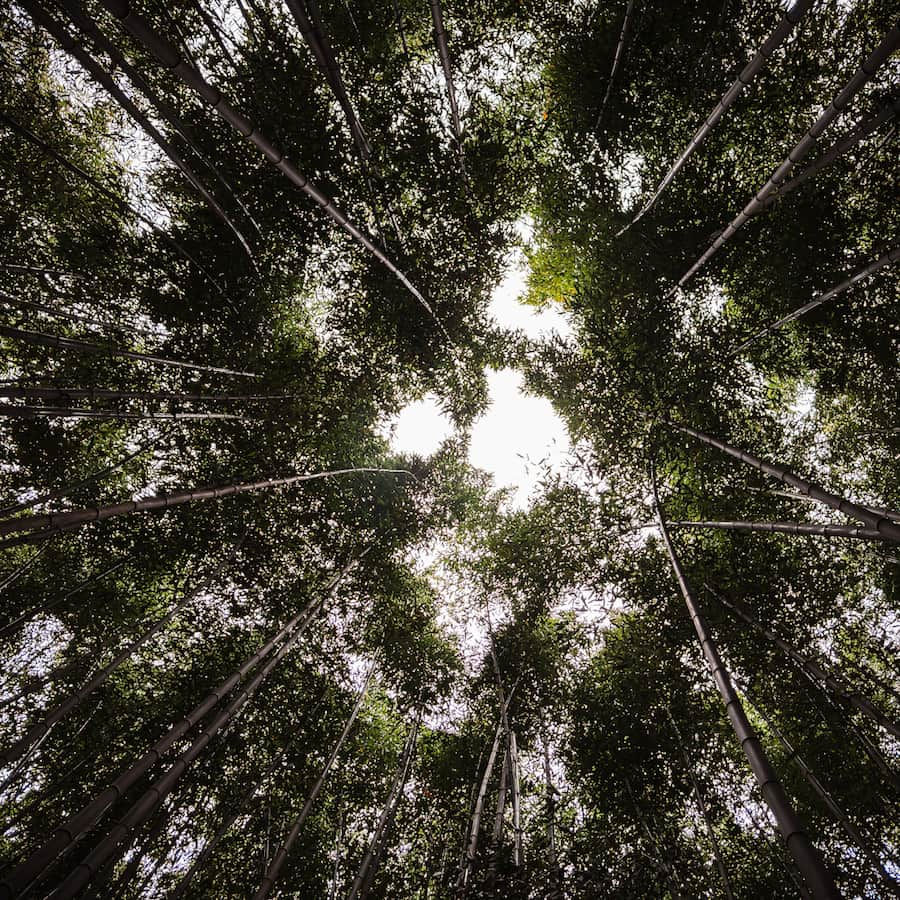
A private tour shouldn't simply be an expensive taxi between attractions. The best ones introduce you to people, places and experiences you'd never discover on your own.
And Veronica delivered exactly that.
Even better, everything was included: entrance fees, private tea ceremonies, all the tea we could drink, matcha ice cream and a sit-down lunch. She even stocked the car with cans of green tea, just in case we hadn't reached our caffeine quota.
Our advice? Bring bottled water, especially if you're caffeine-sensitive. There's only so much tea one person can drink before needing something that isn't tea.
For us, this wasn't just a tour of the Boseong green tea fields. It was one of the best days of our entire South Korea trip.
Boseong Green Tea Fields Travel Guide
All the practical bits you need to plan a visit to the Boseong green tea fields, from where to stay and how to get there to the best time of year to see the plantations at their greenest.
How Long to Visit?
We recommend 2 nights in Gwangju, giving you a full day to explore the Boseong green tea fields without rushing.
We arrived from Seoul the day before, spent nine glorious hours exploring Boseong and continued our journey the following morning. Trust us, you don't want to tack a long train journey onto either end.
Could you see Daehan Dawon in a couple of hours? Absolutely. But travelling all this way to admire one plantation and eat an ice cream seems a rather wasted opportunity.
Give Boseong a full day. The best experiences are well beyond the famous tea fields.
Best Time to Go
We visited in May, when the Boseong green tea fields were so outrageously green they barely looked real.

Late April to early June is our pick, when fresh tea leaves turn the hillsides a brilliant emerald. Summer brings equally lush scenery, but also rising temperatures, humidity and a greater chance of rain.
You can visit year-round, but if you're after those impossibly green photographs, late spring is hard to beat.
And wear comfortable shoes. Those beautifully sculpted terraces come with hills and steps. Quite a few of them.
Where to Stay
Let's be clear: you're staying in Gwangju for Boseong's glorious tea fields, not the hotels.
Accommodation options are uninspiring, so don't agonise over them.
We stayed at the Holiday Inn Gwangju. It isn't winning any awards for atmosphere, but it was the best of the nearby options we found.
It's comfortable, practical and perfectly suited to an early start and hotel pick-up for a private Boseong tour. Job done.
Where to Eat
Boseong puts green tea in everything from desserts to savoury dishes, but our priority was the exceptional matcha ice cream at Daehan Dawon.

For lunch, Veronica found us a charming local spot serving delicious fried pork cutlets, carefully chosen around our dietary restrictions.
She even recommended a restaurant for dinner, accompanying us inside to translate and ensure our shellfish allergies were understood.
We'd have been lost without her. The best local restaurants were tucked away, and navigating menus and food allergies without speaking Korean would have been quite the challenge.
Getting There
Take the KTX from Yongsan Station in Seoul to Gwangju-Songjeong Station (not Gwangju Station!), which takes around 2 hours. We recommend buying KTX tickets when they are released 60 days before departure because they sell out.

From the station, take a 15-25-minute taxi to Holiday Inn Gwangju. We used the app, K.Ride for taxis during our South Korea trip, although Uber is another option worth having downloaded.
Boseong is roughly an hour's drive from Gwangju, depending on which plantation you're visiting.
Our private tour included hotel pick-up and drop-off, so we didn't need to worry about arranging transport between the different stops.
Getting Around
Getting around Boseong without a car is tricky. The plantations, museums and smaller tea farms are scattered across the countryside, with limited public transport connecting them.
You can hire a car, but rural roads aren't always clearly marked. Use NAVER Maps rather than Google Maps for navigation.
We opted for a private tour with Veronica at Tasty Trails Korea, who handled the driving, navigation and local arrangements. Far more time admiring tea fields, considerably less time figuring out how to get from A to B, or whether B was even worth visiting.
Are the Boseong Green Tea Fields Worth Visiting? Our Honest Review
Absolutely. But would we travel all the way from Seoul as a day trip just to visit one tea plantation? Probably not.

The Boseong green tea fields are every bit as spectacular as the photographs, especially in May. But the scenery was only half the magic.
Meeting a local tea farmer, discovering centuries-old traditions and enjoying private tea ceremonies turned a beautiful sightseeing stop into one of our favourite days in South Korea.
The catch? Getting here is a faff unless you're coming from Seoul and heading straight back. Our onward journey from Gwangju to Andong took eight hours, including a ridiculous detour back through Seoul.
Our verdict? Come for the impossibly green hills, book a local guide for the experiences you'd otherwise miss, and don't leave without the matcha ice cream.
Boseong was exactly the unexpected South Korea we'd come looking for.
And while Boseong was everything we'd hoped for, travelling through South Korea came with a few surprises we hadn't bargained for. Read our full South Korea Review →