


8 Things to Do in Gyeongju in 2026: Places We'd Go Back For (And Why)

Updated: 3 days ago
dWe fell hard for Gyeongju. Where else do 1,500-year-old royal tombs tower over trendy cafes and boutiques? Discover the best things to do in Gyeongju, a city unlike anywhere we've ever been.

We started wondering where everyone had gone.
Gyeongju had been lively enough during the day, but as evening rolled in, the streets seemed to empty. Shops closed, the lanes quietened and even Hwangnidan-gil felt noticeably calmer.
Had the entire city simply decided that 9PM was bedtime?
Then we arrived at Wolji Pond. It was absolutely packed.
Young couples wandered hand-in-hand around the illuminated pond, groups of friends posed for photos and the paths were buzzing with the kind of energy we’d been wondering where to find.
Apparently, we'd stumbled upon Gyeongju's date-night headquarters. And honestly, it made perfect sense. The pavilions glowed against the dark water, their reflections stretching across the pond, while the whole place feels almost improbably romantic.
In a Rush? Here's Our Favourite Places to Stay in Gyeongju
You'll want to stay in Gyeongju's historic centre, within walking distance of the royal tombs, ancient sights and Hwangnidan-gil, a charming street lined with cafes, boutiques and restaurants. That means swapping hotels for a traditional hanok, a Korean house built around a courtyard, typically with tiled roofs and wooden beams.
We stayed in the Yeojeon Premium Suite at Soi Hanok Stay and absolutely loved that our room was spacious with a Western-style bed. Had it been fully booked, HanokInn would have been our next choice, although you'd need to embrace the traditional Korean experience of sleeping on a floor mattress.
★★★
★★★
Contents
01 Atmosphere
Affiliate disclosure: Some links in this guide are affiliate links, which means we may earn a small commission if you book or buy through them, at no extra cost to you. We only recommend things we’ve personally booked, used or packed ourselves and would recommend regardless of whether we earn a commission.
Atmosphere

Gyeongju's skyline is less skyscrapers, more enormous grassy hills.
There are places where history is tucked away inside museums, behind glass and underneath carefully worded signs.
Gyeongju is not one of them.
Once the capital of the Silla Kingdom for almost 1,000 years, the city is essentially one enormous archaeological site, with ancient tombs, temples, palaces and Buddhist art woven into modern life.
Around 150 burial mounds still ripple across the city, many of them looking less like tombs than improbably enormous grassy hills.
And that is what makes Gyeongju so enjoyable to explore.
You can wander between 1,500-year-old royal tombs at sunset, then discover that half the city is at the beautifully illuminated Donggung Palace & Wolji Pond or Woljeonggyo Bridge, where half the city has gone for date night, with couples taking approximately 400 photographs of each other.
In Gyeongju, history isn't a backdrop. It's part of the neighbourhood.
8 Best Things to Do in Gyeongju
Gyeongju rewards a little more time than the usual whistle-stop visit suggests. The historic centre is wonderfully walkable, while the temples and museums further out give you a chance to see the Silla story beyond the obvious landmarks.
Here is our personal edit of the best things to do in Gyeongju: the ancient sights that genuinely deserve your time, the slightly unexpected places that made us appreciate Gyeongju beyond its headline attractions, and the seasonal moments worth planning a trip around.
Must-Sees
These are the Gyeongju classics. The royal tombs, Buddhist treasures and night-time landmarks that make the city unlike anywhere else in South Korea.
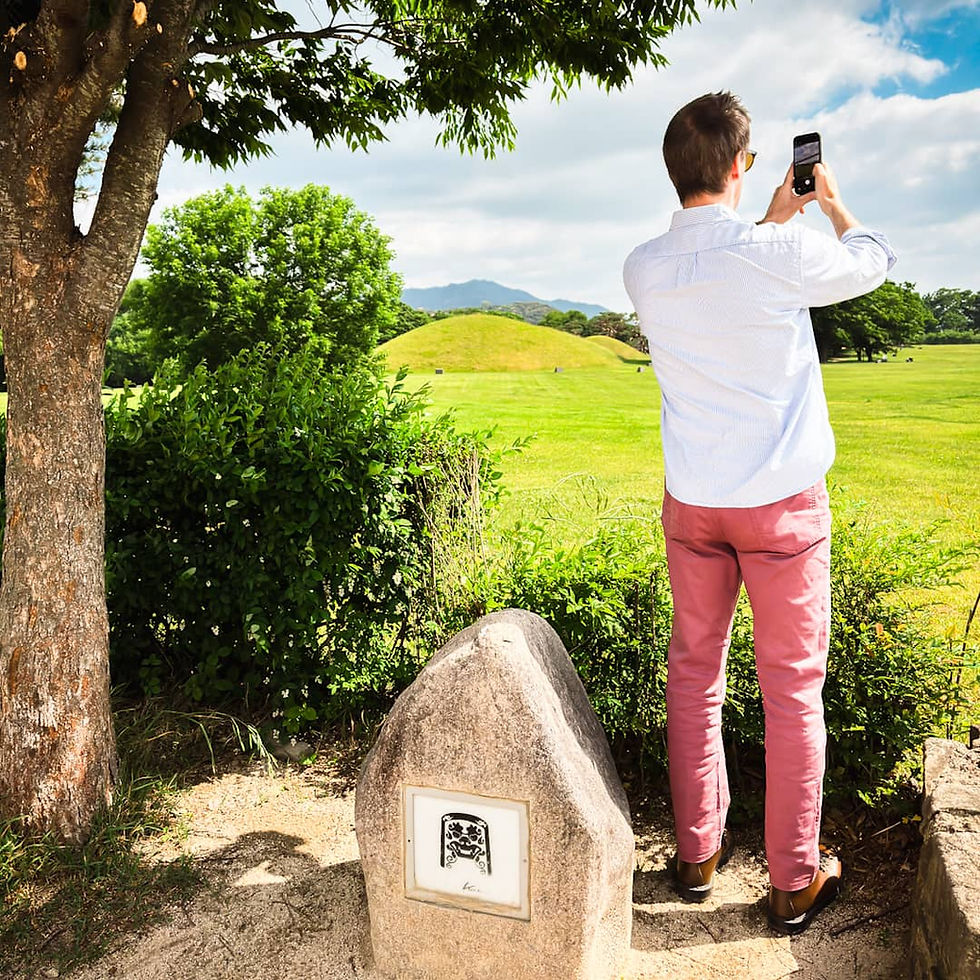
DAEREUNGWON
Walk among ancient tombs
Daereungwon Tomb Complex
Daily 9AM - 10PM
Free entry
The first thing we noticed about Gyeongju wasn't a palace or a temple.
It was the giant tombs.
Around 150 enormous grassy burial mounds are scattered throughout the city, dominating the skyline in a way skyscrapers normally would. They're the resting places of Silla kings and nobles, Korea's answer to the pyramids, just considerably greener. No entrances. No corridors. No way in. The result? Gold crowns, jewellery and royal treasures remained untouched for 1,500 years.
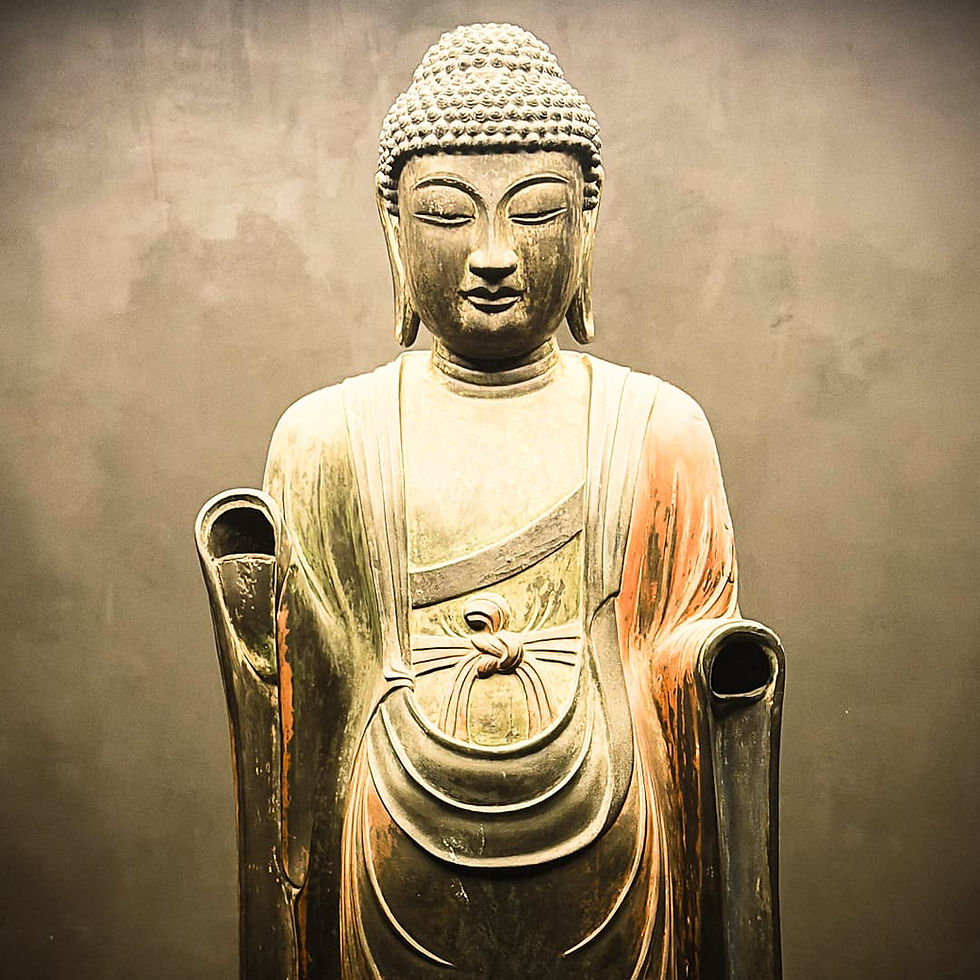
WOLSEONG
See 1500-year old treasure
Gyeongju National Museum
Free entry
Unlike ancient Egyptian tombs, Silla's royal tombs had no entrances or corridors leading to the burial chambers, leaving the treasures inside remarkably well preserved for centuries.
The result is on display at the Gyeongju National Museum.
Gold crowns, jewellery, ceramics and other Silla treasures reveal a kingdom considerably more sophisticated than those giant grassy mounds might suggest.
And yes, the famous Silla gold crowns are every bit as extravagant as you'd hope.

BULGUK-DONG
Explore Buddhist heritage
Bulguksa Temple &
Seokguram Grotto
Daily 9AM - 6PM
Free entry
About 20 minutes by taxi from central Gyeongju, Bulguksa is one of Korea's most important Buddhist sites and one of the highlights of the entire city.
The temple complex is considerably more impressive in person than photographs suggest, with ornate wooden halls, stone pagodas and layers of colourful lanterns set against the surrounding mountains.
Then continue uphill to Seokguram Grotto, part of the same UNESCO listing, where an extraordinary granite Buddha sits inside a stone grotto overlooking the East Sea.
Hidden Gems
Some of Gyeongju’s best sights get considerably better after 5PM. Come for golden tombs, illuminated palaces and reflections worth staying out after dark for.

NODONG-DONG
Catch sunset among the tombs
Nodong-ri Ancient Tombs
Daily 9AM - 10PM
Free entry
Skip across town at sunset, when the open tomb fields of Nodong turn gold and feel almost improbably peaceful.
Unlike manicured Daereungwon, these ancient burial mounds sit right in the fabric of modern Gyeongju, with locals using the surrounding lawns and paths like a neighbourhood park.
The biggest, Bonghwangdae, was once mistaken for a natural hill and is the largest surviving single Silla tomb mound, with a circumference of roughly 250 metres.
INWANG-DONG
Join Gyeongju's hottest date
Donggung Palace & Wolji Pond
Daily 9AM - 10PM
KRW 3,000
If Gyeongju seems suspiciously quiet after dark, this is where everyone went.
The illuminated palace pavilions reflected in Wolji Pond make this one of the city's most atmospheric night stops, and seemingly irresistible to couples.
The pond was created by King Munmu in 674, complete with three islands, landscaped gardens and even rare birds and animals.
Better still, its original name was rediscovered on excavated pottery: Wolji means “pond that reflects the moon.”

GYO-DONG
Catch a perfect nighttime reflection
Woljeonggyo Bridge
Daily 9AM - 10PM (interior)
Free entry
Come after dark, when the illuminated bridge creates an almost absurdly perfect reflection in the water. Then walk a little downstream, where stepping stones take you across the river for the postcard view back towards the bridge.
It looks ancient, but the bridge you see today was completed in 2018. The original was built in 760 during the reign of Silla's King Gyeongdeok, later burned down during the Joseon period, and was reconstructed following archaeological research. It's now Korea's largest wooden pedestrian bridge.
Experiences Worth Planning Around
Gyeongju changes dramatically with the seasons, but spring is the one we'd seriously consider planning around.

GYEONGJU
See Gyeongju in cherry blossom season
Gyeongju Daereungwon Cherry Blossom Festival
27-29 Mar 2026 1-10PM (2027 dates TBD)
Location: Daereungwon Stone Wall Road
Free entry
For 3 days, the road closes to traffic and becomes a pedestrian-only tunnel of cherry blossoms, with street performers, food trucks, pop-up markets and photo spots beneath the trees.
Stay after dark, when the blossoms are illuminated from 8–10PM and the whole road glows pink.
The rather spectacular bit? You’re walking beneath the blossoms with ancient Silla royal tombs rising alongside you. Very Korean historical drama, minus the elaborate costume and dynastic crisis.

BULGUK-DONG
Go beyond the glass in a sacred grotto
Seokguram Grotto
Thu 13 May 2027 9AM - 6PM
Tue 2 May 2028 9AM - 6PM
Free entry
For one day a year, on Buddha’s Birthday, Seokguram lets visitors beyond the protective glass and inside its normally sealed 8th-century grotto, bringing you face-to-face with the enormous seated Buddha and intricate carvings. The date changes each year because it follows the lunar calendar.
Be prepared to queue. We waited around 30 minutes, shoes come off before entering and photography inside is strictly prohibited.
Getting back to Gyeongju is surprisingly harder. The shuttle bus runs roughly hourly and was completely packed, so order an Uber or K.Ride instead. Uber rescued us, and even with Buddha’s Birthday traffic gridlocked, it was inexpensive. You may need to try several times before a driver accepts, so don't leave it until the grotto is closing.
Gyeongju Travel Guide
All the practical bits you need to make your trip to Gyeongju run smoothly, from where to stay and what to eat to getting around, booking ahead and downloading the right apps.
Where to Stay, Eat & How to Get Around

STAY
Sleep in a hanok in the historic centre
★★★
★★★
We stayed in the spacious Yeojeon Premium Suite at Soi Hanok Stay, right in the middle of the historic area. HanokInn, in the same area, was our plan b.
Fancy a traditional Korean breakfast? Soi Hanok Stay delivers one to your balcony, complimentary, most mornings of the week, courtesy of a nearby restaurant (when it’s open).
The location was the biggest win. We could walk out into the old centre rather than spending half our morning getting to it, which is particularly useful in Gyeongju because many of the best sights are clustered surprisingly close together.
And after a day of temples, burial mounds and approximately 47,000 steps, being stumbling distance of Hwangridan-gil’s cafes, shops and restaurants was rather hard to beat.
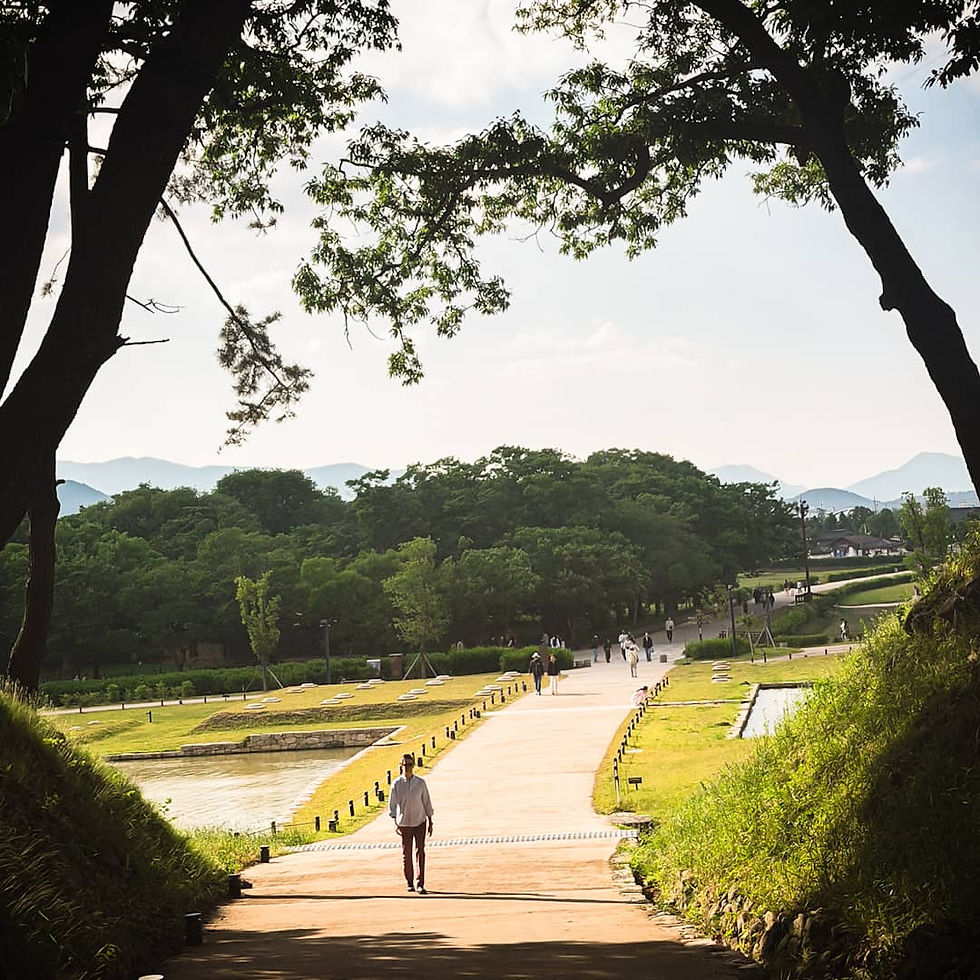
MOVE
Walk the historic centre, taxi the rest
K.Ride
Download alongside Uber. to access local taxis
iOS →
Android →
Gyeongju's historic centre is compact enough to explore largely on foot, with Daereungwon, Cheomseongdae, Gyerim, Wolseong, Gyochon and Woljeonggyo all forming a very manageable sightseeing circuit.
The city's tourism board puts many of the key historic sites within roughly a 2km radius, but you're still going to need wheels to see everything.
For Bulguksa and Seokguram, take a taxi.
For two people, they're often inexpensive enough that the time saved is worth considerably more than the few pounds you might save by wrestling with buses.

EAT
We did not expect to recommend pizza in Korea
Wed-Mon
11AM - 2:30PM + 5-8PM
Reservations not accepted
We came to Gyeongju for ancient kingdoms and Buddhist treasures.
We did not come expecting epic pizza.
And yet.
Domi Pizza served our favourite meal in Gyeongju, with excellent pizza and an even better stout. The pizzas are on the small side, so don't be alarmed when we tell you we each ate two. Getting a table, however, requires persistence.
They don't take advance reservations. We arrived for lunch to find the waitlist full, but agreed to give us a dinner slot that evening. We turned up on time, behaved ourselves, and somehow earned another table for the following night.
Yes, we ate there twice. The stout may have had something to do with it.
Apps to Download
Download these three before you go. Because discovering you needed them after arriving is considerably less useful.
Before You Go
Give Gyeongju 3 nights. You can see the highlights in 2 days. We'd still choose 3 nights.
Day 1 gives you the historic centre and the night illuminations. Day 2 lets you properly explore the museum and further-flung sights. Day 3 gives you Bulguksa and Seokguram without turning the entire trip into an archaeological endurance event.
If you have another day, add Yangdong Folk Village or hike Mount Namsan, where Silla-era Buddhist carvings, statues and pagodas are scattered through the landscape.
Mount Namsan was the one that got away for us. Which obviously means we'll now have to go back.
And...don't leave the night sights until the last minute.
Gyeongju's illuminated sites are not an optional afterthought. Wolji and Woljeonggyo are two of the city's biggest evening draws, and the historic centre becomes a completely different place after dark.
Is Gyeongju Worth Visiting? Our Honest Review
Gyeongju doesn't look like anywhere else we'd been. In South Korea or anywhere.
Across the historic centre, enormous grassy burial mounds rise above the city, with low-slung buildings seemingly keeping their distance and nothing competing with the tombs for the skyline. But what makes Gyeongju so enchanting is how naturally all that history fits into everyday life.
Ancient tombs sit beside neighbourhood streets. Archaeological sites appear between cafes and houses. And then there's Hwangridan-gil, where beautifully converted hanoks are filled with boutiques, restaurants and design cafes just minutes from 1,500-year-old royal graves.
One minute you're contemplating the rise and fall of the Silla Kingdom. The next you're eating a waffle coin stuffed with an improbable amount of melted string cheese on a stick.
Somehow, none of it feels incongruous. We were completely enchanted.